| Origin | Mid-20th century |
| Concept | Flying car |
| Challenges | Significant technical challenges preventing mainstream consumer adoption |
| Definition | A vehicle capable of traveling both on roads and in the air |
| Current status | Limited adoption for specialized applications, ongoing research to improve technology |
| Early development | Experiments with vertical take-off and landing (VTOL) vehicles |
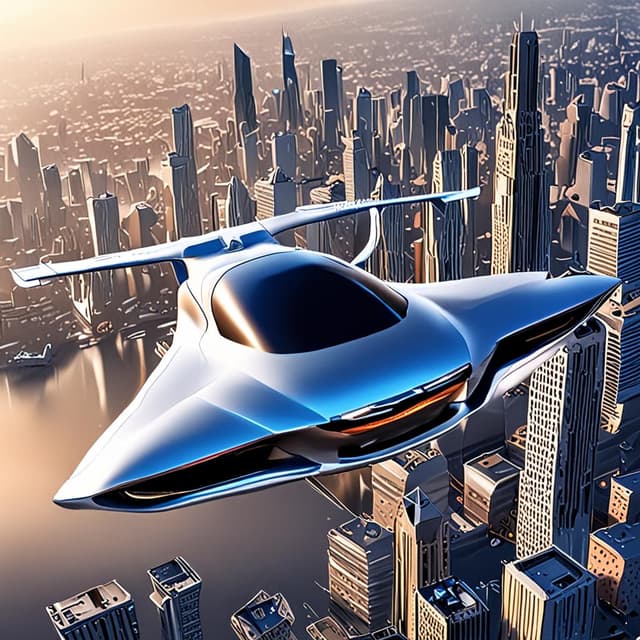
The idea of a practical "flying car" that can travel both on roads and in the air has captivated the human imagination for generations. Though numerous prototypes have been built over the decades, a number of technological and regulatory hurdles have prevented flying cars from becoming a widespread consumer product. However, they have found niche uses in certain business, government and military applications.
The concept of a roadable aircraft, or "roadable plane," dates back to the early 20th century, with numerous inventors and engineers attempting to create functional flying car designs. However, it was not until the mid-20th century that significant advancements in vertical take-off and landing (VTOL) technology made the prospect of a practical flying car seem more feasible.
In the 1950s and 1960s, a number of aerospace companies, including Convair, Bell Helicopter, and Moller International, began experimenting with VTOL prototypes that combined features of both automobiles and aircraft. These early flying car designs utilized technologies such as ducted fans, tilt-rotors, and gyrocopters to achieve vertical lift. Some models, like the Convair Model 118 VectorPlane and the Moller M400 Skyper, even demonstrated the ability to transition between driving on roads and flying.
While these early prototypes showed promise, they faced significant technical hurdles around noise, safety, range, and affordability that prevented them from becoming practical consumer vehicles. However, some designs found limited use in niche applications, such as military reconnaissance, medical evacuation, and executive transportation.
Though a true mass-market flying car has remained elusive, these VTOL vehicles have found adoption in certain business, government and military applications where their unique capabilities provide tangible benefits.
For example, some companies and government agencies have utilized small VTOL aircraft for tasks like aerial photography, power line inspection, and emergency response in urban areas. Their ability to take off and land vertically without the need for a runway makes them well-suited for operating in crowded cities. Major users have included police, fire departments, construction companies, and news media organizations.
In the military realm, VTOL designs have seen use for tasks like troop transport, cargo delivery, and reconnaissance in both combat and non-combat scenarios. Their nimble flight characteristics and ability to operate from confined spaces have made them valuable assets. Prominent military flying car models have included the Bell Rocket Belt and the Piasecki VZ-8 AirGeep.
Additionally, some businesses and wealthy individuals have adopted VTOL vehicles as a means of private transportation, utilizing them for short-range commuting and travel between homes, offices, and airports. While these flying cars never became mainstream consumer products, they have carved out a niche in serving the specialized transportation needs of certain organizations and high-net-worth individuals.
Despite decades of research and development, a number of technical and regulatory obstacles have prevented flying cars from becoming a widespread reality for average consumers. Chief among these challenges are:
Nonetheless, the dream of a practical, consumer-focused flying car persists. Ongoing research by both established aerospace firms and new startups aims to gradually overcome these hurdles through innovations in electric propulsion, autonomous flight, and airspace management. While a true "flying car" future may still be many years away, incremental progress suggests that niche applications and even limited consumer availability could become a reality in the coming decades.
